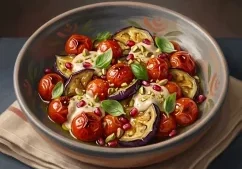
Lamb’s Lettuce and Tomatoes Salad
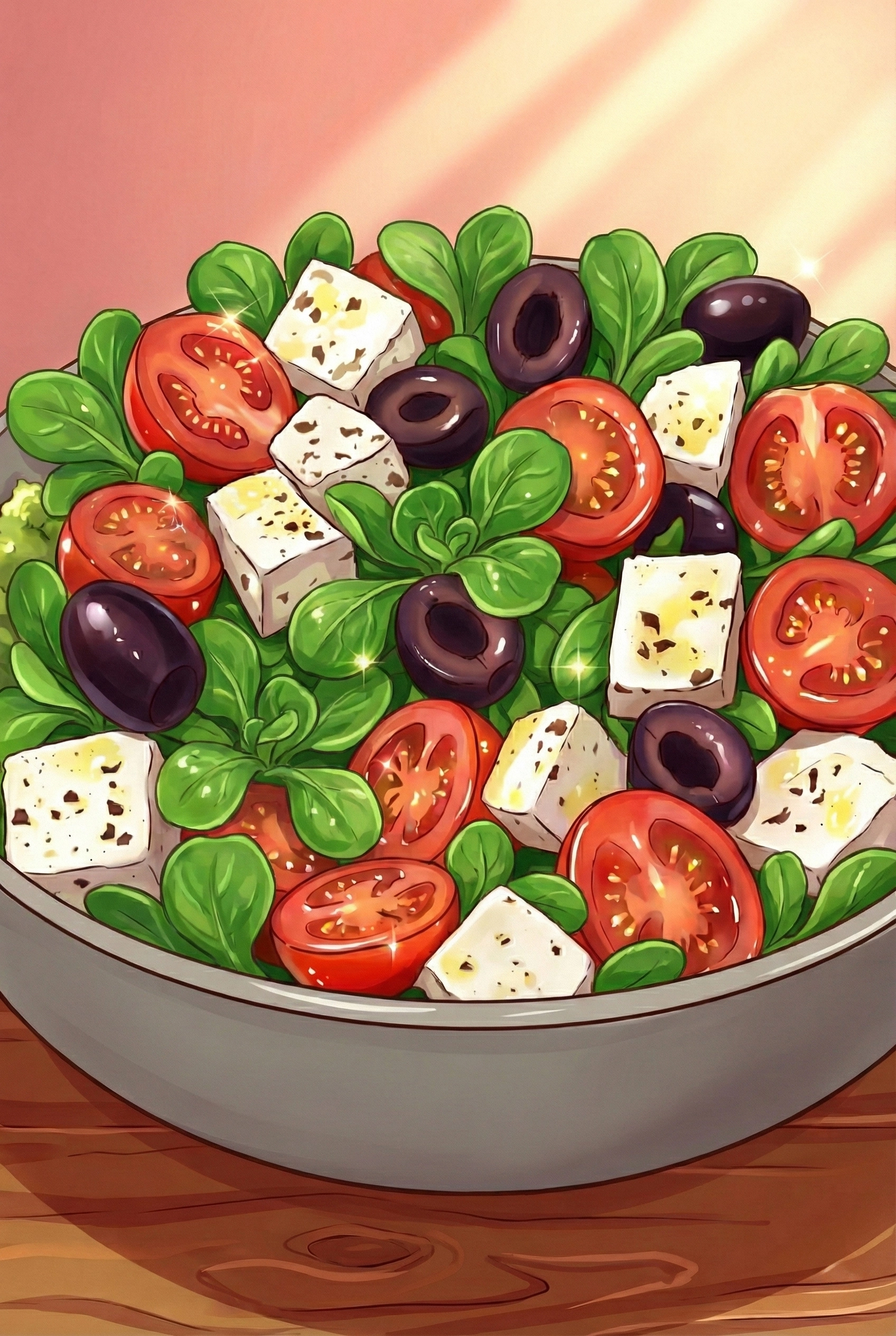
Step 0
A fast lamb’s lettuce and tomatoes salad with mozzarella, black olives, and basil. The dressing stays simple: olive oil, lemon juice, salt, and black pepper. Light enough for a side, satisfying enough for a quick lunch.
Step 1
Ingredients for lamb’s lettuce and tomatoes salad
- Tomatoes 4 big tomatoes
- Black olives 25 black olives
- Olive oil 2 tablespoons
- Lemon juice 1 tablespoon
- Salt a pinch
- Black pepper a pinch
- Lamb’s lettuce 80 g
- Mozzarella cheese 150 g
- Basil leaves 15 basil leaves
Step 2
How to make the salad
- Prep the produce. Cut tomatoes into bite-size pieces. Tear or cube mozzarella. Slice basil thin.
- Build the bowl. Add lamb’s lettuce first, then scatter tomatoes, olives, mozzarella, and basil.
- Dress. Stir olive oil with lemon juice, salt, and black pepper. Drizzle evenly.
- Toss gently. Toss just until coated so the greens stay fluffy and the mozzarella stays intact.
Make-ahead: Prep tomatoes, basil, and mozzarella in advance, but dress right before serving for best texture.
Step 3
Health-oriented chef cues
- Satiety balance: Mozzarella and olive oil add protein and fat, while tomatoes and lamb’s lettuce keep the volume high and the meal light.
- Sodium check: Olives can carry a lot of salt. If you want lower sodium, reduce olives first and then dial back added salt.
- Oil lever: Olive oil boosts flavor and helps absorb fat-soluble nutrients, but it is calorie-dense. For a lighter version, use a bit less oil and add a touch more lemon.
- Texture protection: Dress at the last moment to keep the lettuce crisp and the tomatoes less watery.
Note: If you change ingredient amounts (especially olive oil, olives, or mozzarella), the nutrition values shown in this post will no longer be exact.
Nutrition facts and macros
Macros & Calories
per 100 g
Calories
108.4 kcal
- Saturates: 3.4 g
- Sugars: 1.7 g
- Fiber: 0.9 g
- Salt: 0.6 g
See full macronutrient table (per 100 g)
| Nutrient | Amount | % RI |
|---|---|---|
| Energy | 453.7 kJ / 108.4 kcal | |
| Fat | 8.7 g | |
| Saturated | 3.4 g | |
| Monounsaturated | 4.4 g | |
| Polyunsaturated | 0.6 g | |
| Carbohydrate | 3 g | |
| Sugars | 1.7 g | |
| Starch | 0.1 g | |
| Fibre | 0.9 g | |
| Protein | 4.5 g | |
| Salt | 0.6 g | |
| Sodium | 226.78 mg |
Carbohydrates breakdown
| Nutrient | Amount | % RI |
|---|---|---|
| Total Carbs | 3.94 g | |
| Fiber | 0.94 g | |
| Starch | 0.12 g | |
| Sugars | 1.70 g | |
| Fructose | 0.79 g | |
| Glucose | 0.72 g | |
| Sucrose | <0.01 g | |
| Lactose | 0.17 g | |
| Maltose | 0.00 g | |
| Added Sugars | 0.00 g | |
| Sugar Alcohol | <0.01 g | |
| Net Carbs | 2.99 g |
Fat (lipids) breakdown
| Nutrient | Amount | % RI |
|---|---|---|
| Fat | 8.72 g | |
| Monounsaturated | 4.35 g | |
| Polyunsaturated | 0.58 g | |
| Omega-3 | 0.06 g | |
| Omega-6 | 0.42 g | |
| Saturated | 3.37 g | |
| Trans-Fats | 0.11 g | |
| Cholesterol | 15.26 mg |
Protein (amino acid) breakdown
| Amino acid | Amount | % RI |
|---|---|---|
| Protein | 4.54 g | |
| Alanine | 0.15 g | |
| Arginine | 0.19 g | |
| Aspartic acid | 0.38 g | |
| Cystine | 0.03 g | |
| Glutamic acid | 1.15 g | |
| Glycine | 0.10 g | |
| Histidine | 0.15 g | |
| Isoleucine | 0.20 g | |
| Leucine | 0.40 g | |
| Lysine | 0.41 g | |
| Methionine | 0.11 g | |
| Phenylalanine | 0.22 g | |
| Proline | 0.41 g | |
| Serine | 0.24 g | |
| Threonine | 0.17 g | |
| Tryptophan | 0.06 g | |
| Tyrosine | 0.23 g | |
| Valine | 0.26 g |
Key Micronutrients
top 15 by % RI, per 100 g
See full micronutrient table (per 100 g)
| Nutrient | Amount | % RI |
|---|---|---|
| Vitamin A | 94.05 µg | |
| Vitamin C | 12.14 mg | |
| Vitamin D | 3.09 IU (≈0.08 µg) | |
| Vitamin E | 0.98 mg | |
| Vitamin K | 11.09 µg | |
| B1 (Thiamine) | 0.03 mg | |
| B2 (Riboflavin) | 0.07 mg | |
| B3 (Niacin) | 0.41 mg | |
| B5 (Pantothenic Acid) | 0.08 mg | |
| B6 (Pyridoxine) | 0.08 mg | |
| Vitamin B12 | 0.13 µg | |
| Choline | 7.75 mg | |
| Folate | 12.10 µg | |
| Calcium | 120.67 mg | |
| Iron | 1.18 mg | |
| Magnesium | 12.57 mg | |
| Phosphorus | 90.39 mg | |
| Potassium | 197.02 mg | |
| Zinc | 0.61 mg | |
| Copper | 0.09 mg | |
| Manganese | 0.14 mg | |
| Selenium | 2.96 µg | |
| Iodine | 0.48 µg | |
| Sodium | 226.78 mg |
Step-by-step instructions
Step 1: Prep the ingredients
Cut 4 big tomatoes into bite-size pieces. Tear or cube 150 g mozzarella and slice 15 basil leaves.
Step 2: Assemble the salad
Add 80 g lamb’s lettuce to a bowl. Top with tomatoes, 25 black olives, mozzarella, and basil.
Step 3: Dress and toss
Mix 2 tablespoons olive oil with 1 tablespoon lemon juice, plus a pinch of salt and black pepper. Drizzle and toss gently, then serve.
Lamb’s lettuce and tomatoes salad FAQs
- Can I make it ahead?
- You can prep the components ahead, but dress right before serving so the lamb’s lettuce stays crisp and the tomatoes stay less watery.
- How do I make it more filling?
- Add a protein (chicken, tuna, beans) or serve with bread. The flavor profile stays the same and it turns into a full meal.
- How do I reduce salt?
- Use fewer olives and reduce added salt first. If needed, add a little more lemon to keep the dressing lively.
- What can I use instead of lamb’s lettuce?
- Any leafy green works. Choose a crisp lettuce for more crunch or a peppery green for a sharper bite.