Rhubarb Beet Smoothie

Step 0
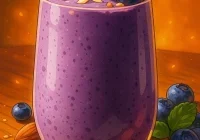
A creamy, lightly sweet rhubarb beet smoothie made with chopped rhubarb, frozen banana, almond milk, oats, honey, and a small piece of beet. Smooth, bright, and easy to drink. Optional seeds and protein powder can increase satiety and make it feel more like a small meal.
Step 1
Ingredients for rhubarb beet smoothie
- Rhubarb, chopped 1 ½ cup
- Banana, frozen pieces 1 banana
- Almond milk (or any milk) 1 cup
- Rolled oats ¼ cup
- Honey 1 tbsp
- Beet (about ⅓ raw beetroot) 2 inch piece
- Optional for more protein
- Hemp hearts 2 tbsp
- Pumpkin seeds 3 tbsp
- Protein powder 1 scoop
Step 2
How to make the smoothie
- Start with liquids. Place the milk, oats, honey, and beet in the bottom of the blender. Add the optional seeds and protein powder if using.
- Add the fruit on top. Place the rhubarb and frozen banana on top.
- Blend until smooth. Secure the lid. Start the blender on low speed and increase to high speed. Blend until everything is completely smooth, stopping to scrape down the sides as needed.
- Serve. Pour into 2 medium glasses and enjoy.
Storage: Best fresh. If needed, refrigerate up to 24 h, then shake hard or re-blend briefly.
Step 3
Health-oriented chef cues
- Fiber helps pacing: Oats plus fruit fiber can help slow down absorption compared with juice, which can support steadier hunger and energy for some people.
- Protein upgrade lever: Adding hemp hearts, pumpkin seeds, and protein powder increases protein and fats, which can increase satiety and make this feel more like a small meal.
- Sweetness control: Honey balances rhubarb’s sharpness. If you want fewer added sugars, reduce the honey and rely on a riper banana to carry sweetness.
- Oxalate awareness: Rhubarb can be high in oxalates. If you have a history of kidney stones, keep portions sensible and discuss what fits you with a clinician.
Note: If you change ingredient amounts (especially honey, banana, milk type, or add seeds or protein powder), the nutrition values shown in this post will no longer be exact.
Nutrition facts and macros
Macros & Calories
per 100 g
Calories
45.9 kcal
- Saturates: 0.1 g
- Sugars: 6.7 g
- Fiber: 1.1 g
- Salt: 0.1 g
See full macronutrient table (per 100 g)
| Nutrient | Amount | % RI |
|---|---|---|
| Energy | 192 kJ / 45.9 kcal | |
| Fat | 0.7 g | |
| Saturated | 0.1 g | |
| Monounsaturated | 0.3 g | |
| Polyunsaturated | 0.2 g | |
| Carbohydrate | 8.9 g | |
| Sugars | 6.7 g | |
| Starch | 1.2 g | |
| Fibre | 1.1 g | |
| Protein | 0.8 g | |
| Salt | 0.1 g | |
| Sodium | 28.54 mg |
Carbohydrates breakdown
| Nutrient | Amount | % RI |
|---|---|---|
| Total Carbs | 10.00 g | |
| Fiber | 1.08 g | |
| Starch | 1.24 g | |
| Sugars | 6.68 g | |
| Fructose | 2.83 g | |
| Glucose | 2.53 g | |
| Sucrose | 1.09 g | |
| Lactose | <0.01 g | |
| Maltose | 0.05 g | |
| Added Sugars | 2.96 g | |
| Sugar Alcohol | 0.02 g | |
| Net Carbs | 8.90 g |
Fat (lipids) breakdown
| Nutrient | Amount | % RI |
|---|---|---|
| Fat | 0.68 g | |
| Monounsaturated | 0.34 g | |
| Polyunsaturated | 0.18 g | |
| Omega-3 | <0.01 g | |
| Omega-6 | 0.17 g | |
| Saturated | 0.09 g | |
| Trans-Fats | 0.00 g | |
| Cholesterol | 0.00 mg |
Protein (amino acid) breakdown
| Amino acid | Amount | % RI |
|---|---|---|
| Protein | 0.83 g | |
| Alanine | 0.03 g | |
| Arginine | 0.05 g | |
| Aspartic acid | 0.07 g | |
| Cystine | <0.01 g | |
| Glutamic acid | 0.15 g | |
| Glycine | 0.04 g | |
| Histidine | 0.02 g | |
| Isoleucine | 0.03 g | |
| Leucine | 0.05 g | |
| Lysine | 0.03 g | |
| Methionine | <0.01 g | |
| Phenylalanine | 0.03 g | |
| Proline | 0.03 g | |
| Serine | 0.03 g | |
| Threonine | 0.02 g | |
| Tryptophan | <0.01 g | |
| Tyrosine | 0.02 g | |
| Valine | 0.04 g |
Key Micronutrients
top 15 by % RI, per 100 g
See full micronutrient table (per 100 g)
| Nutrient | Amount | % RI |
|---|---|---|
| Vitamin A | 18.83 µg | |
| Vitamin C | 5.12 mg | |
| Vitamin D | 15.38 IU (≈0.38 µg) | |
| Vitamin E | 1.49 mg | |
| Vitamin K | 9.16 µg | |
| B1 (Thiamine) | 0.02 mg | |
| B2 (Riboflavin) | 0.03 mg | |
| B3 (Niacin) | 0.28 mg | |
| B5 (Pantothenic Acid) | 0.11 mg | |
| B6 (Pyridoxine) | 0.05 mg | |
| Vitamin B12 | 0.14 µg | |
| Choline | 5.75 mg | |
| Folate | 8.48 µg | |
| Calcium | 100.59 mg | |
| Iron | 0.26 mg | |
| Magnesium | 14.07 mg | |
| Phosphorus | 25.84 mg | |
| Potassium | 182.12 mg | |
| Zinc | 0.18 mg | |
| Copper | 0.04 mg | |
| Manganese | 0.17 mg | |
| Selenium | 0.61 µg | |
| Iodine | 0.06 µg | |
| Sodium | 28.54 mg |
Step-by-step instructions
Step 1: Add the base
Place 1 cup milk, ¼ cup rolled oats, 1 tbsp honey, and a 2 inch piece of beet into the blender. Add optional seeds and 1 scoop protein powder if using.
Step 2: Add fruit and blend
Add 1 ½ cup chopped rhubarb and 1 banana (frozen pieces) on top. Blend from low to high until completely smooth, scraping down the sides as needed.
Step 3: Serve
Pour into 2 medium glasses and enjoy right away.
Rhubarb beet smoothie FAQs
- Can I make it ahead?
- It is best fresh. If needed, refrigerate up to 24 h, then shake hard or re-blend briefly.
- How do I make it sweeter without adding more honey?
- Use a riper banana or slightly reduce the rhubarb. Rhubarb can vary in tartness, so adjust to taste.
- How do I increase protein?
- Add the optional hemp hearts and pumpkin seeds, protein powder, or swap almond milk for a higher-protein milk if it fits your goals.
- Why add beet?
- A small piece gives color, adds micronutrients, and keeps the flavor subtle when used in a small amount.